Lawn Mowing in Knightsbridge

Lawn mowing in Knightsbridge should feel tidy, controlled and straightforward, whether the lawn sits behind a townhouse, within a shared courtyard or as part of a managed garden. Our service centres on regular grass cutting and the practical care that keeps a lawn looking even, healthy and presentable through the growing season. We work with routine mowing plans and one-off visits, always keeping the work focused on the condition of the grass rather than overcomplicating the visit.
The right mowing approach depends on the lawn itself. Cut too short and the turf can look stressed; leave it too long and the finish becomes uneven. We shape each visit around the grass height, access and layout, then make sensible decisions about edging, clipping removal and the final appearance. If you are comparing options, start with the essentials and request a quotation when you are ready to move forward.
As well as mowing, our approach can include the small finishing details that make a lawn look cared for rather than simply cut. That may mean neat edging, sensible handling of clippings and a clear discussion of how often the grass should be maintained. See the wider service overview for the main options we cover across outdoor maintenance, or keep reading to understand how the work is usually planned.
Regular Lawn Mowing and Seasonal Care
Regular mowing is usually the core of lawn care, because grass responds best to steady attention rather than irregular treatment. In a location such as Knightsbridge, where outdoor areas can be formal or compact, a consistent pattern often matters as much as the cut itself. We can maintain a defined appearance with a mow that suits the season, the lawn’s growth rate and the finish you want to preserve.
During warmer periods, grass may need cutting more frequently to keep the surface even and avoid a blunt, overgrown look. In slower-growing months, the aim is simply to prevent the lawn from becoming untidy while avoiding unnecessary stress to the turf. A good mowing plan balances those needs, so the finish stays neat without treating every visit as identical. If you would like to talk through a schedule, review pricing and quotations alongside the work scope.
What We Do During a Lawn Mowing Visit
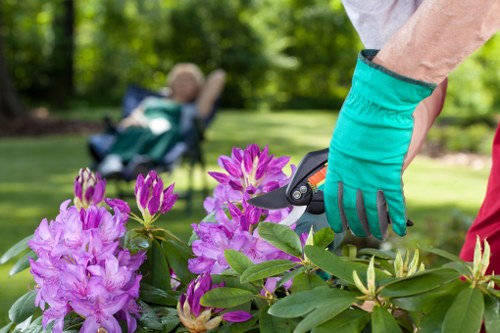
A mowing visit is not only about cutting grass. It also involves checking the overall condition of the area, working carefully around borders and features, and leaving the lawn looking finished rather than half-attended. Depending on the site, we may trim to a preferred height, tidy the edges, and remove cuttings where needed. The emphasis is on a clean result that suits the garden’s layout and level of use.
Some lawns are simple rectangles, while others include curves, narrow runs or obstructions that need more careful handling. Attention to detail becomes important where the grass meets paving, beds or steps, because those boundaries are often what make the difference between a basic cut and a properly neat finish. If the lawn is part of a wider outdoor area, you may also want to look at garden maintenance for related upkeep that sits alongside mowing.
In practical terms, the visit usually comes down to three things: the cut height, the finish at the edges and the treatment of clippings. Those choices depend on the condition of the grass, the layout of the site and whether the lawn is used for regular enjoyment or mostly visual effect. A careful service respects those differences rather than forcing one standard result onto every garden.
Hedge Edges, Boundaries and Neat Finishing
Although mowing is the main service, the surrounding planting and boundary lines affect how finished the lawn looks. Straight edges, clipped transitions and a clear line where grass meets a path can make a simple garden feel much more orderly. In some cases, that means combining mowing with light tidying around the perimeter so the lawn reads as one coherent area rather than a patchwork of surfaces.
Where hedges frame a lawn, overhanging growth can reduce light and add to the sense of clutter around the grass. For customers who need more than mowing alone, our hedge trimming service can help bring the boundary lines back under control. The aim is not to overwork the space, but to keep the visible edges crisp and balanced.
Garden Clearance for Overgrown Areas

Some lawns begin with more than routine grass cutting. If the area has been left for a while, the work may need a first clear-up before mowing can be done properly. That can involve removing built-up debris, dealing with stubborn growth at the margins and creating enough access for the lawn to be cut safely and evenly. The result is a cleaner starting point and a more realistic basis for future upkeep.
Where overgrowth extends beyond grass, it is often sensible to treat the area as part of a broader tidy-up rather than a single mowing task. Our garden clearance page covers this type of work in more detail, including situations where the lawn is only one part of the task. For many customers, the first visit is about restoring order; later visits can then focus on keeping the space under control.
Useful preparation is usually simple. Clearing away movable items, giving access to gates or side passages and noting any fragile features can make the visit more efficient, especially on compact sites. If there are areas you would rather leave untouched, mention them at the quotation stage so the mowing scope can be set correctly from the start.
Lawns Within Wider Landscaping Work
A lawn often forms just one part of a larger garden layout, and the mowing schedule may need to sit alongside planting, surfacing and shaping work. If the goal is a more coherent outdoor space, lawn cutting can support broader improvements by keeping open areas clean and visually balanced while other elements are developed around them. This matters in formal gardens, shared spaces and smaller courtyards alike.
For customers considering more substantial changes, landscape gardening provides a route into work that goes beyond maintenance and into the planning of the garden itself. Mowing still has its own place within that, because an orderly lawn helps show the structure of the space and prevents the grass from distracting from other features. It is often the simplest maintenance task, but also one of the most visible.
About Knightsbridge
Knightsbridge is an area of central London best known for its position between Hyde Park, Belgravia and South Kensington, with Knightsbridge Road and Brompton Road forming much of its familiar urban character. The district grew from a rural crossing point into one of the capital’s most recognisable residential and commercial neighbourhoods, shaped by nineteenth-century development and later high-value redevelopment. Its street pattern combines grand terraces, mansion blocks and luxury retail frontages, with a strong contrast between busy roads and quieter side streets. Hyde Park lies to the north-west, giving the area immediate access to one of London’s largest royal parks, while the nearby gardens and squares add a more ordered, formal feel to parts of the district. The Victoria and Albert Museum, the Natural History Museum and the Science Museum are all close by in neighbouring South Kensington, contributing to the wider cultural setting. Knightsbridge Underground station sits on the Piccadilly line, linking the district to the rest of the city. Well-known landmarks include Harrods, whose ornate façade has become one of the area’s defining visual references, and the luxury hotel and embassy buildings that reflect the neighbourhood’s international profile. The area’s architecture is a mixture of historic masonry, later apartment developments and carefully managed commercial buildings, many of which sit behind private fronts or within discreet landscaped settings. That blend of dense urban fabric, prestige addresses and pockets of greenery gives Knightsbridge a distinctive character that is both formal and highly urban.
How We Shape the Finish
A good lawn finish depends on more than a single pass with a mower. The grass should look even in tone and height, but also suit the setting. A formal front garden may call for a sharper, more uniform result, while a private rear lawn might simply need a tidy, healthy cut that avoids scalping or uneven patches. We judge the finish against the lawn’s own condition rather than aiming for an artificially polished look that does not suit the turf.
Where grass has been cut too low in the past, the priority is often to restore balance slowly rather than chase a very short finish. That is one reason why a sensible mowing plan matters. It helps the lawn recover strength, reduces avoidable stress and keeps the overall appearance consistent over time. If you are arranging work across several outdoor tasks, landscaping may be relevant where the lawn is part of a larger redesign or improvement programme.
We aim for a practical, presentable outcome that respects the site and the grass. That means choosing a method that suits the season, the layout and the condition of the lawn on the day, rather than forcing a one-size-fits-all result. The best mowing is usually the work you notice by its neatness, not by any unnecessary disruption to the garden.
Access, Layout and Site Practicalities

Access is often one of the key factors when planning lawn mowing in Knightsbridge, because many properties have limited front space, side entries or shared approaches. A compact garden may require careful movement of equipment, while a larger lawn may need a route that avoids crossing delicate borders or finished surfaces. Good planning keeps the visit efficient and helps protect the surrounding area.
It is also useful to think about the layout of the lawn before work begins. Paths, ornamental beds, water features and seating areas can all affect how a mower is used and where extra care is needed. If the lawn is in a shared setting, the work may need to be timed or arranged to avoid unnecessary disruption. Accessibility information may be helpful if you want to understand how the site and contact arrangements are presented.
Comparing Lawn Mowing With Broader Outdoor Maintenance
Lawn mowing is often the most regular task in outdoor maintenance, but it is only one part of keeping a garden orderly. Depending on the condition of the site, other work may be needed at different times of year to support the result. A lawn that is routinely cut but left with untrimmed edges, unmanaged growth or scattered debris can still appear neglected, even if the grass itself is in good shape.
That is why many customers treat mowing as the anchor task and then add related maintenance where needed. For example, tree lopping and removal may be relevant if heavy shade or obstructive branches are affecting the grass, while more general upkeep can be coordinated through a wider maintenance plan. The right combination depends on what the garden actually needs, not on a fixed package.
For straightforward jobs, mowing alone may be enough. For more involved gardens, a broader approach can keep the whole space balanced. Either way, the objective stays the same: a lawn that looks cared for, sits neatly within its surroundings and does not require unnecessary intervention to remain presentable.
Getting a Quotation for Lawn Mowing

Quotation requests work best when they focus on the essentials: the size or type of lawn, how often you would like it maintained, and whether the area is currently straightforward or overgrown. Those points help shape a sensible scope and avoid assumptions about what the visit should include. If the lawn is part of a larger outdoor job, it is also useful to say so at the outset, because that can affect the order in which the work is tackled.
When you are ready, ask for a quotation and keep the request clear and practical. A brief note about access, nearby features and any sections to leave untouched can help the proposal reflect the real job rather than a generic mowing visit. For a direct route into enquiries, contact us here and send the details you already know.